Monday, 13 May 2019

Duffyesque Poem

My Primary School Experience:

I was in Raha since the first grade, and I have many memories that I still treasured forever but also incidents that I will never forget. I was the only Arab girl with the thickest American accent ever (still true), therefore I always seemed to stick out throughout elementary. I remember being the slowest reader in grade 1, but somehow I was the top of the class for timetable challenges in grade 3. There would always be random elementary drama and every day for lunch in 4th and 5th grade I would have soggy hot dog sandwiches with a hot apple juice box. Till this day I cannot eat a hot dog or drink apple juice without gagging. However, somehow the teachers always found me hilarious and would still joke about me to my parents. till this day.

Here is my Poem about my 9th grade Drama teacher enjoy:

In Ms. Erica's Class

We would never do work
In fact, I don't ever remember doing work.
She was one of the strangest people tohave ever meet.
Beckett. Chekov. Brecht.
She adored them, like teens on their phones.
Though, I'm not sure where she got her degree.
Or if she has one.

Ms. Erica changed my life,
she made me realize that not all teachers knowwhat they are doing.
But I mean sometimes we would do work.
Like when we spent 2 lessons making the mannequin challenge,
it was hard work not to laugh.
And trying to figure out the killer in wink murder.
Hard work. Hard work. Hard work.

You could never speak Arabic though.
Ms. Erica always thought we were talkingbad about her when we did. But,
Korean, Dutch, German, Russian,
Spanish, Swedish, and French were
acceptable.

She would always get so angry and
red, but when she did she would
quietly return to her desk, close her eyes
and say "I will soon be in Amsterdam,
smoking grass on a park bench".
No wonder we all got 7s.

Tuesday, 16 April 2019

Hell is Other People - No Exit


Hell Is Other People


Jean-Paul Sartre’s play No Exit was written in 1943 in Paris during the invasion of the Nazi’s. This play is known for being the portrayal of what life in Paris was like during the reign and how the Parisians were living. Many readers associate Sartre to be similar to all the characters, however especially Inez because she seems to represent freedom and that is what Sartre desires when writing the play. Each character undergoes conflict with the characters around them and how they also affect each character’s inner conflict.

One recurring theme in No Exit was cowardice, as this was the main character Garcin’s hell. As the character on Earth had the constant fear that the people around him would think he is a coward. However, even though Garcin is now in hell he still has that fear that the other two characters in the room with him, will also think that he is a coward. This shows that Garcin’s hell can only be caused by other people because it brings him social anxiety and to have a constant need for needing to please other people. Also, Garcin was referring back to life on Earth that, “they won’t forget me, not they! They’ll die, but others will come after them to carry on the legend. I’ve left my fate in their hands”. As this shows that Garcin is creating his own living hell wondering about how people think of him on Earth even though he had left that life behind him.

Inez is a man-hating lesbian who loves to torture people for her own pleasure. However, in No Exit, Inez’s hell is that the woman she wants (Estelle) wants a strong man and not a woman. When Estelle began to fool around with Garcin Inez said “Don’t forget I’m here I’m watching. I shan’t take my eyes off of you Garcin when you are kissing here you will feel them boring into you”. As seeing the woman she wanted with a man was her own hell, she tried to make herself feel better by trying to torture the other characters. In saying that Inez will watch them kissing makes the other character’s uncomfortable which gives satisfaction to Inez. Also, since the play was based off of what Paris felt like under the Nazi rule, this line could be the fact that Sartre felt as if he was always being watched, even in private situations.

Estelle’s hell is that she is not able to get the satisfaction of a man and that she is not able to see the way that she looks because she has no mirror. From an existential point of view, Estelle retreats into Bad faith because she is in denial in the fact that she is in hell and she cannot continue her own earthly social life. At the beginning of the play Estelle cries “Please, please don’t use that word (The dead). It’s so--so crude. In terribly bad taste, really. It does not mean much, anyhow. Somehow i feel we’ve never been so much alive as now. If we’ve absolutely got to mention this -- this state of things, I suggest we call ourselves-- wait! -- absentees.” When, Garcin and Inez keep telling Estelle that she is indeed in Hell, however, this makes her more irritated that other people are telling her what is happening. Also, when Estelle falls for Garcin and Garcin rejects her, it brings her self esteem to a low because that the only man left for her rejects her which does not bring her satisfaction. Not only the rejection, but also the fact that Estelle cannot see herself and has to trust another person (Inez) to make sure her appearance is presentable makes her unwary as well. This is because Estelle does not trust Inez’s taste and now Estelle has to trust Inez to make sure Estelle is somewhat presentable.

In conclusion, Garcin’s hell is the fear of other people thinking he is a coward and that constant anxiety of people pleasing. Inez’s hell is that she wants a woman but the only woman available does not want her. Finally, Estelle’s hell is that she wants a man but Garcin does not want her and that fear of not being able to see what she looks like because she wants to look presentable. As all of these forms of mental hell’s all rely on other people and how other people react. This supports Sartre’s “Hell is Other People” because they cause the anger, and frustration in these characters minds and their constant uneasiness that goes in a loop.


Saturday, 9 March 2019

The Women in Chronicle of a Death Foretold

Compose character sketches of the women in Chronicle of a Death Foretold. Describe their lives, their aspirations, the choices that are available to them, and their individual responses to the circumstances in which they find themselves.  

Pura Vicario is Angela, Pedro, and Pablo Vicario's mother. When Angela was returned home by Bayardo San Roman, after he discovers she is not a virgin, Pura beats her daughter. She completely devotes her life to her children and her husband. Pura is an extremely strict mother, however, wants to seem to the rest of society that she is the ideal mother. Also her children are both fueled by machismo and marianismo.  Her goal is that her daughters are able to marry an eligeable bachelor. "They're perfect," she was frequently heard to say. "Any man will be happy with them because they've been raised to suffer".  Also, that her family is seen as innocent and fit well in the colombian society. As Pura Vicario had the choice to not hit her children and be strict with them. As that is what the character believed to be the best way for the children to behave, instead of treating them with love. "She devoted herself with such spirit of sacrifice to the care of her husband and the rearing of her children that at times one forgot she still existed".  This shows to the audience that Pura Vicario is satifised with her life because she does not try to change it.


Maria Alejandrina Cervantes is a "hoe" who owns a brothel. She surprisngly is the only woman in the novella that is treated as an equal to men. The town sees her as the women to taught the community about sex, whereas usually someone would be killed when a girl looses her virignity out of marriage. Even though she is a prostitute she is seen as an independent woman. As even the narrator said "Maria Alejandrina Cervantes, about whom we used to say that she would go to sleep only once and that would be to die, was the most elegant and the most tender woman I have ever known, and the most serviceable in bed, but she was also the strictest".  As Maria completely contrasts with the sterotypical marianismo girl, she aspires for money and to work on her own. Marquez used this character to create that double standard for women and to comment on the hypocrisy of the Colombian people. Also many readers speculate, if Maria represented feminism in the novel because she was an independent woman and disgarding society's rules.


Angela Vicario is undoubtely one of the most important characters in the novella. As many readers argue if Angela is the protagonist of the story, because we see her transformation from an innocent girl to becoming a woman. At the begnning of the novella the narrator said "She had a helpless air and a poverty of spirit that augured an uncertain future for her". Angela was forced to marry Bayardo San Roman against her free will. However, after she was returned by Bayardo home and after 20 years Angela became a very mature woman. The narrator wrote "She was so mature and witty that it was difficult to believe that she was the same person. What surprised me most was the way in which she'd ended up understanding her own life. After a few minutes she no longer seemed as aged to me as at first sight, but almost as young in my memory, and she had nothing in common with the person who'd been obliged to marry without love at age of twenty". Once again, this could fall under the feminist perspective that the women learned that understanding her self is more important than being in a married relationship.


Friday, 15 February 2019

Catholic Influence in Colombia

Gabriel Garcia Marquez's "Chronicles of a Death Foretold" is set in the 1950s in Colombia; where Catholicism is heavily influenced. In 2018 it was recorded that there were 49 million Colombians, and approximately 90% of those are Catholic. Therefore, it is easy to conclude that the Catholic Church would heavily influence the Colombian people. For atheists in Colombia, they are considered the minority, but they still have to participate in Catholic events and celebrations. Could Gabo be commenting on the extreme pressure of religion through his novella? (I dont know...just a thought). 
In the daily language with the Colombian people, many phrases include; "Si dioz quiere" (God willing), "Dios te bendiga" (God bless you), and "Gracias a dios" (thank God). Furthermore, Catholicism is extremely important to the Colombian culture that even their regular phrases include religion. As well as that, even important Catholic events ( Baptism, communion, confirmation, marriage and so forth), had become synonymous with religion and culture.
Also, Catholicism believes that religion and state are the same, which leads to why the Pope in the president of Vatican City and how in Colombia religion impacts their politics greatly. A survey in 2014 showed that 93% of Colombians approved Pope Francis, and a majority said that for whatever occurrence in their life they justify it by "Porque dios quiere" (because God wants it). In addition, Colombia has suffered from many political conflicts including the FARC which are basically: "The Revolutionary Armed Forces of Colombia are Colombia's largest rebel group. They were founded in 1964 as the armed wing of the Communist Party and follow a Marxist-Leninist ideology" (which I know the whole Lit class must love). The FARC is not religious oriented and is against the Church and State being one (whereas Catholics truly believe in), which would ultimately cause many disputes between the Colombian people. This leads to that Catholicism impacts Colombia to an extent that there is a rebel group that is against the church.


Monday, 28 January 2019

Kafka's Women....and men? XD


There’s no doubt, that Franz Kafka had some controversial sexual desires and needs. However, many readers believe that his homosexuality is the key to truly understanding his texts. 

Many of Franz Kafka's friends noted that Kafka had many "sexual desires", however he never admitted to be a homosexual because of the harsh society he lived in last century. Although, in his diaries it did mention many of Kafka's fantasies about many different sensual things.

Therefore, referring to The Metamorphosis, the main character Gregor Samsa, shows incestuous feelings for his sister Grete. Many theories state that Gregor Samsa was actually a representation of Kafka, which concludes that he also had the idea of incest with his sisters. Kafka had two younger siblings and Gregor Samsa has one younger sibling. Many readers could be viewing this as a relation to each other. ;)

(i hope whoever reads this enjoyed it. it was one of the strangest things i had ever written lmao) (just the last paragraph tho).

Saturday, 24 November 2018

Frankenstein Adaptation

I watched Tim Burton's "Frankenweenie", for this task. As I wanted to see how they took this gothic fiction novel and turned it into a children's film.


Victor Frankenstein:

  • This character was presented throughout the entire novel as an innocent boy who only wanted to bring his dog back to life. Of course, Victor was fascinated by science but also he wanted to use what he had learned to bring back his dog. 
  • As this contradicts of how viewers feel about the original Frankenstein; that the scientist was the real monster trying to bring back the dead. Whereas, in this adaptation; the viewers ultimately feel sympathy for Victor since all he wants is his dog back to life. 
  • This character does not fit into the idea of either Promethean or a Mad scientist since he does not wish to have power or to improve science. 
  • However, throughout the story, the other characters do believe that Victor was dangerous that he was able to bring back life. All the other characters were shocked by this experiment and immediately thought negative of it. 
  • In this adaptation, the viewers do not view Frankenstein as the monsters but the other children who try and duplicate his experiment. As other students tried to change their pets as well, which did create monsters. Therefore, the other students created the other monsters instead of Frankenstein himself. 
Sparky:
  • Throughout the entire plot of the story, the audience feels empathy for the dog as he is not creating any problems, as maybe the original creation might have. 
  • When Sparky came back to life, the tone was uplifting and heartwarming that Victor got his dog back. Victor was thrilled to have Sparky back in his life. Although, in the novel, Frankenstein is both disgusted and afraid of his creation. 
  • Also, all other characters in this adaptation reacted the same way in Mary Shelly's novel; disgust and scared. Then after Sparky saved Victor Frankenstein everyone realized that Sparky is harmless and is the same dog as he was before. 
Extra Notes:
maybe Tim Burton made the children who tried to experiment for the purpose of science to create monsters because their goal was morally wrong. Whereas, Victor's goal was more acceptable. 

Wednesday, 24 October 2018

Oscar Wilde's London Victorian Society


Victorian Class Structure:

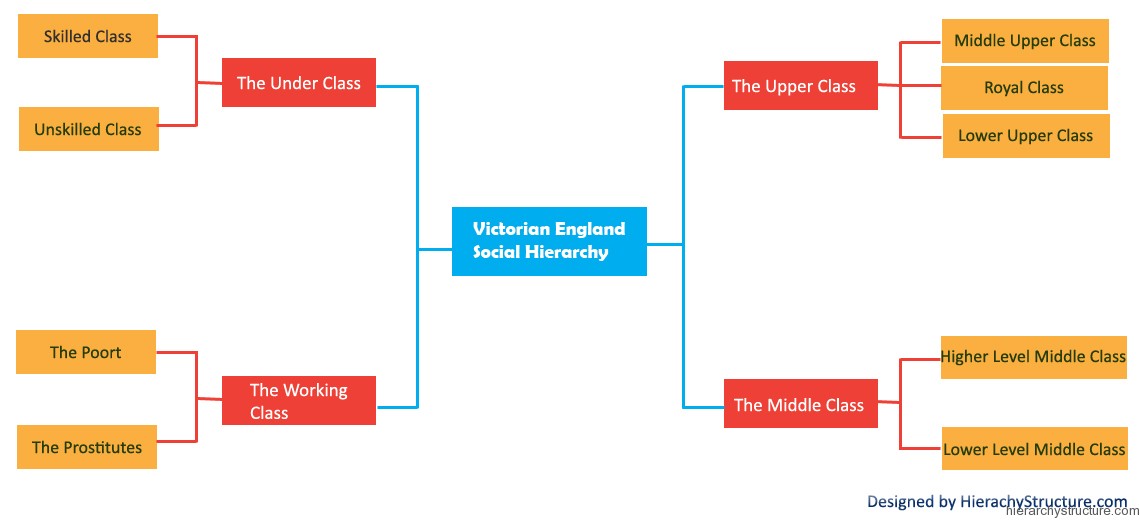
The Victorian class structure was separated into three different categories; the upper class, middle class, and the working class. The upper class mainly consisted of the aristocrats, nobles, dukes, and wealthy families. The middle class were people who owned business; they typically were families that were comfortable in their income. However, the working class was separated into two groups, the skilled and unskilled workers. Every family in the working class had a lack of money, food, and proper housing. They were treated the worst in this era.


Victorian Values:

The Victorian values were influenced by Queen Victoria herself, and the Christian church. Both prioritized success, duty, seriousness, proper behavior, and modesty. The social class structure (shown above) was an extremely important part of the Victorian era. As they used to believe that your place on the system would define who you are and how important you are. The upper class was supposedly perceived as perfection and were the main ideas of the Victorian Era. On a day to day, they seemed very put together, however, most of them had scandalous lives. They resembled who every person who was not in the upper class wanted to be. Women in this era when married would stay at home and be only used for "decoration" or for aesthetic only.


Double Standards/ Victorian Hypocrisy:

There was a double standard for women in the Victorian Era. For example, men would go around looking for prostitutes (while being married) all the time and that was common. However, there was an emphasis on the purity of females and how they should not do what the man do unless she is a sham. Another double standard is that if men would do homosexual acts then they would go to jail for 2 years, however, there is no law for if women do homosexual acts.
In the Victorian Era, people from the Upper class would create banquets or fundraisers to help poor people. Although, if the upper class see the working class people on a day to day then they would completely disregard them. This is an example of hypocrisy. Another example of hypocrisy is that they shame on prostitutes, even though a majority of the upper class uses prostitutes for their 'scandalous lives'.

Oscar Wilde's Vices and Virtues- His fall to disgrace

Oscar Wilde and many other writers in the Victorian Era had been accused of homosexual acts as in many of his works he subtly brings a homosexual vibe. Therefore people thought he was gay and he was put in jail for around 2 years. In Oscar Wilde's "The Importance of Being Earnest' play he mocks the upper class by making them snobbish, ignorant, and self-important. Also in Oscar Wilde's "The Picture of Dorian Gray", the character Lord Henry, resembles the epitome of the Victorian era, whereas in the book he is viewed as the villain that corrupted the innocence. Furthermore, Oscar Wilde used his works to express his opinions on the Victorian Society and was imprisoned for him being accused of being a homosexual. 

Duffyesque Poem

My Primary School Experience: I was in Raha since the first grade, and I have many memories that I still treasured forever but also incide...