Victorian Class Structure:
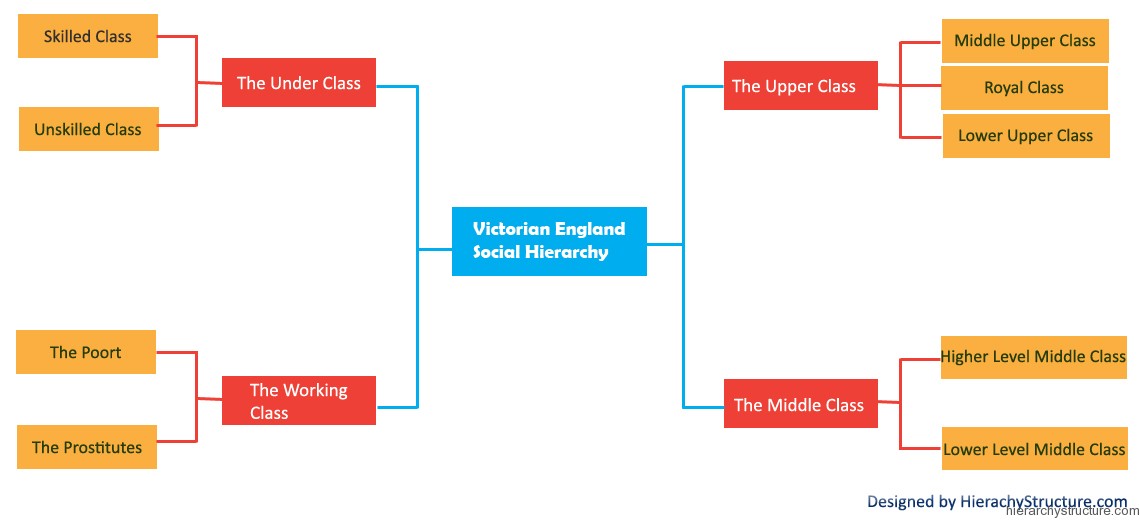
The Victorian class structure was separated into three different categories; the upper class, middle class, and the working class. The upper class mainly consisted of the aristocrats, nobles, dukes, and wealthy families. The middle class were people who owned business; they typically were families that were comfortable in their income. However, the working class was separated into two groups, the skilled and unskilled workers. Every family in the working class had a lack of money, food, and proper housing. They were treated the worst in this era.
Victorian Values:
The Victorian values were influenced by Queen Victoria herself, and the Christian church. Both prioritized success, duty, seriousness, proper behavior, and modesty. The social class structure (shown above) was an extremely important part of the Victorian era. As they used to believe that your place on the system would define who you are and how important you are. The upper class was supposedly perceived as perfection and were the main ideas of the Victorian Era. On a day to day, they seemed very put together, however, most of them had scandalous lives. They resembled who every person who was not in the upper class wanted to be. Women in this era when married would stay at home and be only used for "decoration" or for aesthetic only.
Double Standards/ Victorian Hypocrisy:
There was a double standard for women in the Victorian Era. For example, men would go around looking for prostitutes (while being married) all the time and that was common. However, there was an emphasis on the purity of females and how they should not do what the man do unless she is a sham. Another double standard is that if men would do homosexual acts then they would go to jail for 2 years, however, there is no law for if women do homosexual acts.
In the Victorian Era, people from the Upper class would create banquets or fundraisers to help poor people. Although, if the upper class see the working class people on a day to day then they would completely disregard them. This is an example of hypocrisy. Another example of hypocrisy is that they shame on prostitutes, even though a majority of the upper class uses prostitutes for their 'scandalous lives'.
Oscar Wilde's Vices and Virtues- His fall to disgrace
Oscar Wilde and many other writers in the Victorian Era had been accused of homosexual acts as in many of his works he subtly brings a homosexual vibe. Therefore people thought he was gay and he was put in jail for around 2 years. In Oscar Wilde's "The Importance of Being Earnest' play he mocks the upper class by making them snobbish, ignorant, and self-important. Also in Oscar Wilde's "The Picture of Dorian Gray", the character Lord Henry, resembles the epitome of the Victorian era, whereas in the book he is viewed as the villain that corrupted the innocence. Furthermore, Oscar Wilde used his works to express his opinions on the Victorian Society and was imprisoned for him being accused of being a homosexual.
Victorian Values:
The Victorian values were influenced by Queen Victoria herself, and the Christian church. Both prioritized success, duty, seriousness, proper behavior, and modesty. The social class structure (shown above) was an extremely important part of the Victorian era. As they used to believe that your place on the system would define who you are and how important you are. The upper class was supposedly perceived as perfection and were the main ideas of the Victorian Era. On a day to day, they seemed very put together, however, most of them had scandalous lives. They resembled who every person who was not in the upper class wanted to be. Women in this era when married would stay at home and be only used for "decoration" or for aesthetic only.
Double Standards/ Victorian Hypocrisy:
There was a double standard for women in the Victorian Era. For example, men would go around looking for prostitutes (while being married) all the time and that was common. However, there was an emphasis on the purity of females and how they should not do what the man do unless she is a sham. Another double standard is that if men would do homosexual acts then they would go to jail for 2 years, however, there is no law for if women do homosexual acts.
In the Victorian Era, people from the Upper class would create banquets or fundraisers to help poor people. Although, if the upper class see the working class people on a day to day then they would completely disregard them. This is an example of hypocrisy. Another example of hypocrisy is that they shame on prostitutes, even though a majority of the upper class uses prostitutes for their 'scandalous lives'.
Oscar Wilde's Vices and Virtues- His fall to disgrace
Oscar Wilde and many other writers in the Victorian Era had been accused of homosexual acts as in many of his works he subtly brings a homosexual vibe. Therefore people thought he was gay and he was put in jail for around 2 years. In Oscar Wilde's "The Importance of Being Earnest' play he mocks the upper class by making them snobbish, ignorant, and self-important. Also in Oscar Wilde's "The Picture of Dorian Gray", the character Lord Henry, resembles the epitome of the Victorian era, whereas in the book he is viewed as the villain that corrupted the innocence. Furthermore, Oscar Wilde used his works to express his opinions on the Victorian Society and was imprisoned for him being accused of being a homosexual.


